
coca leaf

Bolivia wins coca-chewing victory at UN

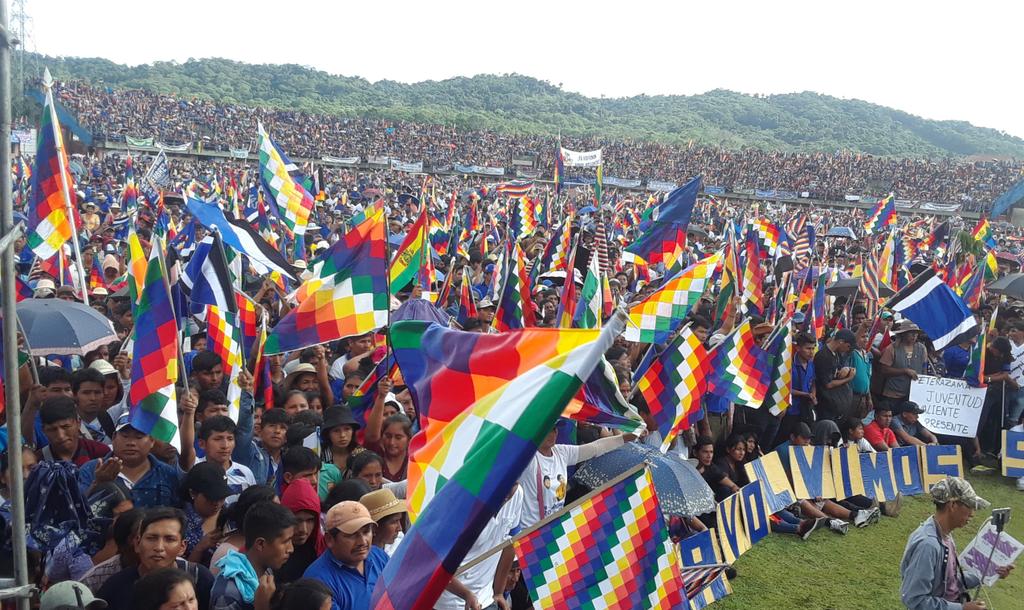
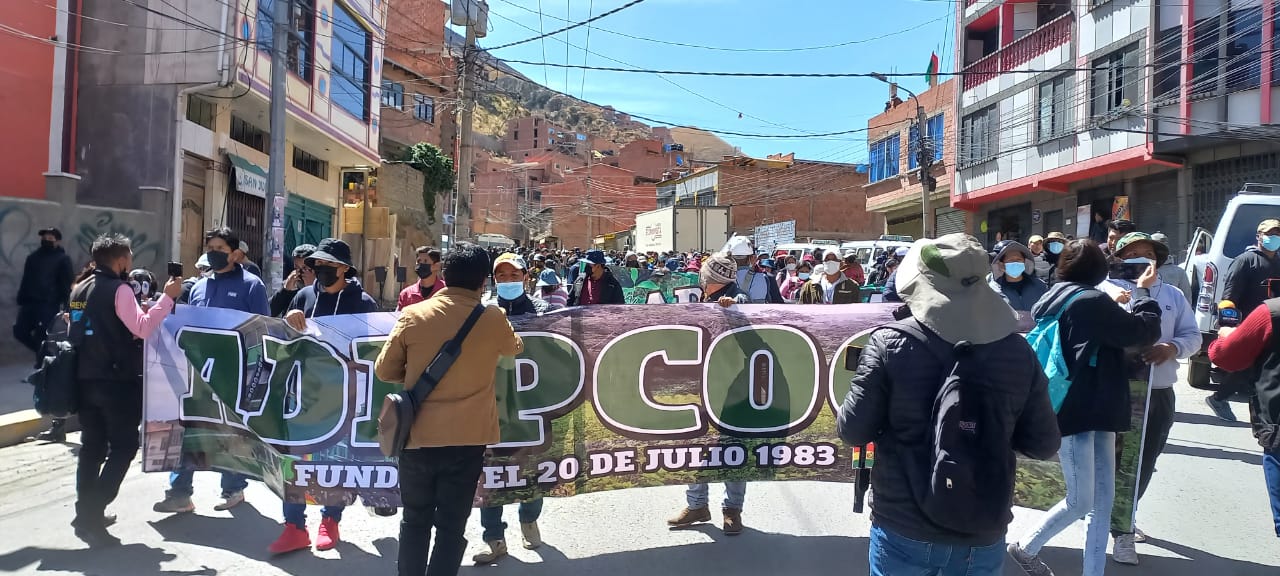
Bolivia was re-admitted to the UN Single Convention on Narcotic Drugs Jan. 11—with a special dispensation recognizing the traditional use of coca leaf as legal within its borders, to officially take effect in one month. Official celebrations are planned for the victory in La Paz and Cochabamba next week. Fifteen countries objected to Bolivia's dispensation—far short of the 62 needed to have blocked it, a third of the 183 signatory states. The dissenting governments were the United States, UK, Russia, Japan, Mexico, Canada, Germany, France, Italy, the Netherlands, Sweden, Finland, Portugal, Israel and Ireland. An official US statement said the administration continues to believe that coca legalization "will lead to a greater supply of cocaine and increased cocaine trafficking and related crime."

Bolivia: progress seen in coca policy

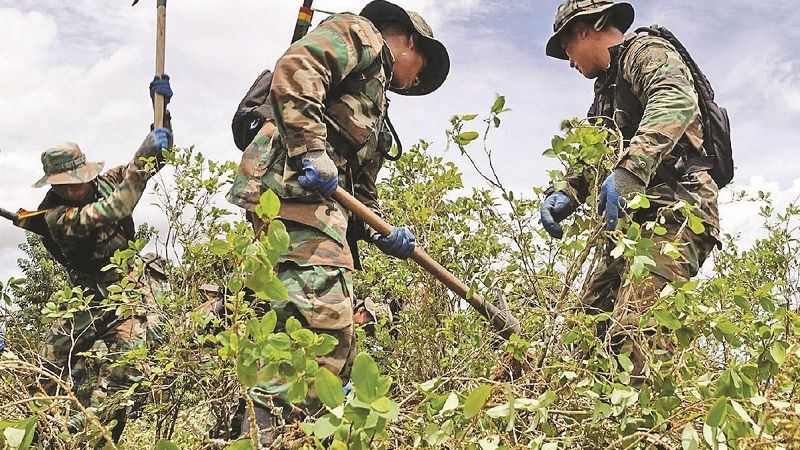
Total area planted with coca in Bolivia dropped by up to 13% last year, according to separate reports by the UN Office on Drugs and Crime and the White House Office of National Drug Control Policy. Bolivia stepped up efforts to eradicate unauthorized coca plantings, and reported an increase in seizures of cocaine and cocaine base—even as the Evo Morales government expanded areas where coca can be grown legally. "It's fascinating to look at a country that kicked out the United States ambassador and the DEA, and the expectation on the part of the United States is that drug war efforts would fall apart," Kathryn Ledebur, director of the Andean Information Network, told the New York Times. Instead, she said, Bolivia's approach is "showing results." 

Peru: will land titling undercut Sendero?

Peru's President Ollanta Humala on Oct 25 announced the creation of a new multi-million dollar fund for development projects in the Upper Huallaga Valley and the Apurímac-Ene River Valley (VRAE)—the last two remaining areas of the country where the Shining Path insurgency remains active. The initiative is aimed at undermining the insurgency and providing economic alternatives to coca cultivation. (La Republica, Oct. 25) The government's Organism for the Formalization of Informal Property (COFOPRI) also announced that land titles would be granted to 784 campesino families in San Martín region's provinces of Huallaga and Lamas, both in the Huallaga Valley. Since August 2011, a total of 3,513 land parcels have been titled to peasant families in San Martín, in a bid to pacify the restive region. (Andina, Oct. 25)

Colombia apologizes for Amazon genocide

Colombia's President Juan Manuel Santos on Oct. 12—recognized in Latin America as Día de La Raza—issued an official apology to indigenous communities in the Amazon for deaths and destruction caused by the rubber boom beginning a century ago. From 1912 to 1929 the Peruvian firm Casa Arana, led by rubber baron Julio César Arana with British backing, exploited rubber near La Chorrera in what is now Colombia's Amazonas department. Up 100,000 people were killed and communities devastated in the operations, with indigenous rainforest dwellers forced into slave labor and slain or displaced if they resisted. The situation was brought to the world's attention following an investigation by British diplomat Roger Casement, who had previously documented similar atrocities in the Belgian Congo.

Peru coca crop rises for sixth year: UN

Peru's coca crop increased by some 5.2% in 2011, according to the UN Office on Drugs and Crime (UNODC)—marking the sixth consecutive year that cultivation increased in the Andean nation. Some 64,400 hectares of coca cultivation were detected in satellite images, compared to the estimated 61,200 hectares cultivated in 2010. While the Upper Huallaga Valley and Apurímac-Ene River Valley (VRAE) continued to account for some 50% of Peru's illegal coca crop, the area under cultivation in these zones increased by only 1%. However, cultivation was up by over 40% in northern Peru, with the provinces of Putumayo and Bajo Amazonas (both in Loreto region) especially named—areas newly opened to cultivation, where the government carries out no eradication campaigns. "Drug traffickers are becoming more efficient," said Flavio Mirella, chief of UNODC's Peruvian office, during a presentation of the report in Lima. "Traffickers need less coca leaf to produce more cocaine. Routes of supply are diversifying and producing areas are getting closer to certain routes of exit" toward Bolivia and Brazil, he said. (Bloomberg, UNODC press release, Sept. 27; BBC News, Sept. 26*)

"El Loco" Barrera, Colombia's most wanted, busted in Venezuela

Authorities from four countries cooperated in a months-long operation that led to the arrest Sept. 18 of Daniel Barrera AKA "El Loco"—dubbed the "last of the great capos" by Colombia's President Manuel Santos—on a street in San Cristóbal, a town in Venezuela's western Táchira state. Barrera was apprehended while making a call from a phone booth, allegedly after one of his relatives had given up his location. The arrest followed four months of cooperation between Colombia's National Police, the US Central Intelligence Agency (CIA), the UK's MI6 and Venezuela's National Anti-Drug Office (ONA). According to Colombia's defense minister, Juan Carlos Pinzón, the kingpin had been in Venezuela for the past eight months and was running his business while moving between several towns near the Colombian border.

Peru: jungle shoot-out as narco-flight intercepted

Peru's National Police Anti-Drug Directorate (DIRANDRO) claimed a blow against the resurgent Sendero Luminoso guerillas after intercepting a plane loaded with 350 kilograms (770 pounds) of cocaine in plastic-wrapped bricks when it landed at a clandestine airstrip in a jungle area of Oxapampa province, Pasco region, Sept. 18. The crew of the Bolivian-registered Cessna put up armed resistance before fleeing into the jungle. A manhunt to apprehend them is now underway. DIRANDRO said the cocaine  originated in the Apurímac-Ene-Mantaro River Valley (VRAEM), a jungle zone just south of Oxapampa where the "narcosenderista" brothers Víctor, Jorge and Martín Quispe Palomino—known by the respective code-names  "José," "'Raúl" and "Gabriel"—are said to control coca production. The cocaine was believed to have been brought to Oxapampa by back-pack along jungle trails, and was to be flown to Bolivia for re-export to Brazil in an operation overseen by wanted Bolivian kingpin William Rosales. (RIA-Novosti, La Republica, InfoSur Hoy, Peruvian TimesReuters, Sept. 18)

Venezuela, Bolivia give US backtalk over drug war "blacklist"

For a fourth year running, the White House narcotics "blacklist" (officially the Presidential Determination on Major Illicit Drug Transit and Drug Producing Countries, released Sept. 14) named Venezuela and Bolivia as nations that have "failed demonstrably" to fight the drug trade, making them ineligible for US aid. The governments in Caracas and La Paz struck back angrily to the announcement. "Venezuela deplores the United States government's insistence on undermining bilateral relations by publishing this kind of document, with no respect for the sovereignty and dignity of the Venezuelan people," the Venezuelan Foreign Ministry said in a communique, accusing Washington of a "permanent line of aggression against independent sovereign governments." Bolivian President Evo Morales said in a speech in the Andean region of Oruro: "The United States has no morality, authority or ethics that would allow it to speak about the war on drugs. Do you know why? Because the biggest market for cocaine and other drugs is the United States. They should tell us by what percentage they have reduced the internal market. The internal market keeps growing and in some states of the United States they're even legalizing the sale of cocaine under medical control." (EFE, Sept. 15)

Syndicate content